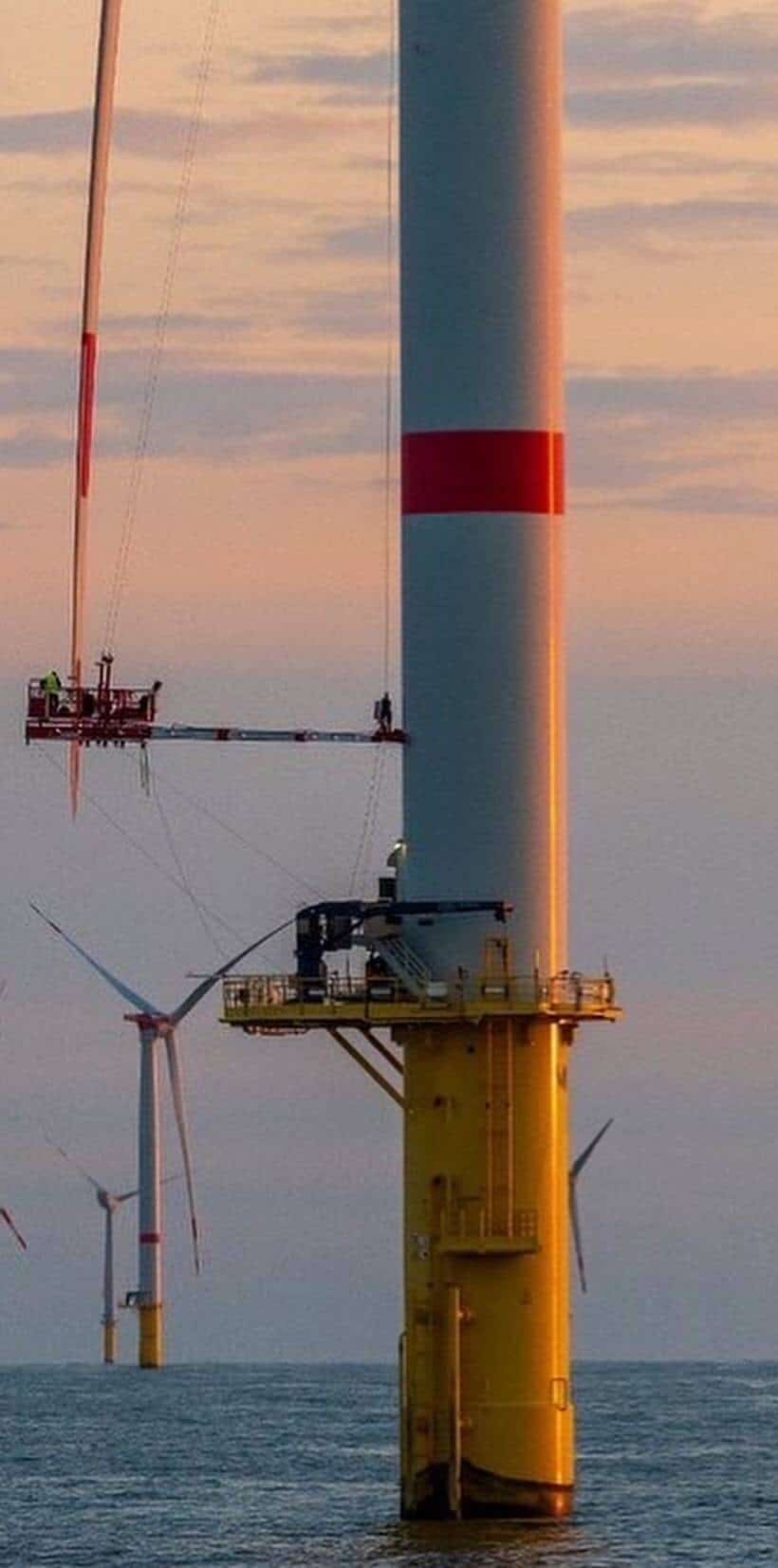
Come 'at the windmill' with us and become part of the green transformation.
The renewable energy sector, specifically wind energy, has been one of the most rapidly growing industries in the last decade. The new Renewable Energy Country Attractiveness Index (RECAI) conducted by EY ranks Poland 15th. It is thus emerging as a significant player in the renewable energy market.
A report by world leaders calls for a tripling of global renewable energy capacity to 11,000 GW by 2030. The climate crisis requires urgent investment to achieve global net zero emissions targets.
"Will I get a job after doing my training?"
By 2026, there will be more than half a million technicians working in the wind sector globally, employed in the construction, operation and maintenance of installations. According to the latest GWO and GWEC report, the industry's labour market will grow by more than a third in the next five years.
According to the report, the demand for new employees in the wind power industry is expected to increase by 33 per cent over the next five years, from 426.7 thousand people in 2021 to 568.8 thousand in 2026. This means that 28.4 thousand skilled workers should be added every year.
In our experience, and based on data collected from technicians, the money invested in the full training (including the Blade Repair module) paid for itself within two months of completion.
"How much do you earn in a job like this?"
The average salary for a technician varies between €250 and €500 per day for so-called 'second-hand' work. There are still companies that pay good technicians, team leaders, supervisors salaries in the range of €600-700 per day.
"What is Offshore and Onshore?"
Today, wind farms, by their location, are divided into those occurring onshore - onshore - and those located offshore, representing one of the fastest growing renewable energy sectors in Europe - offshore.